


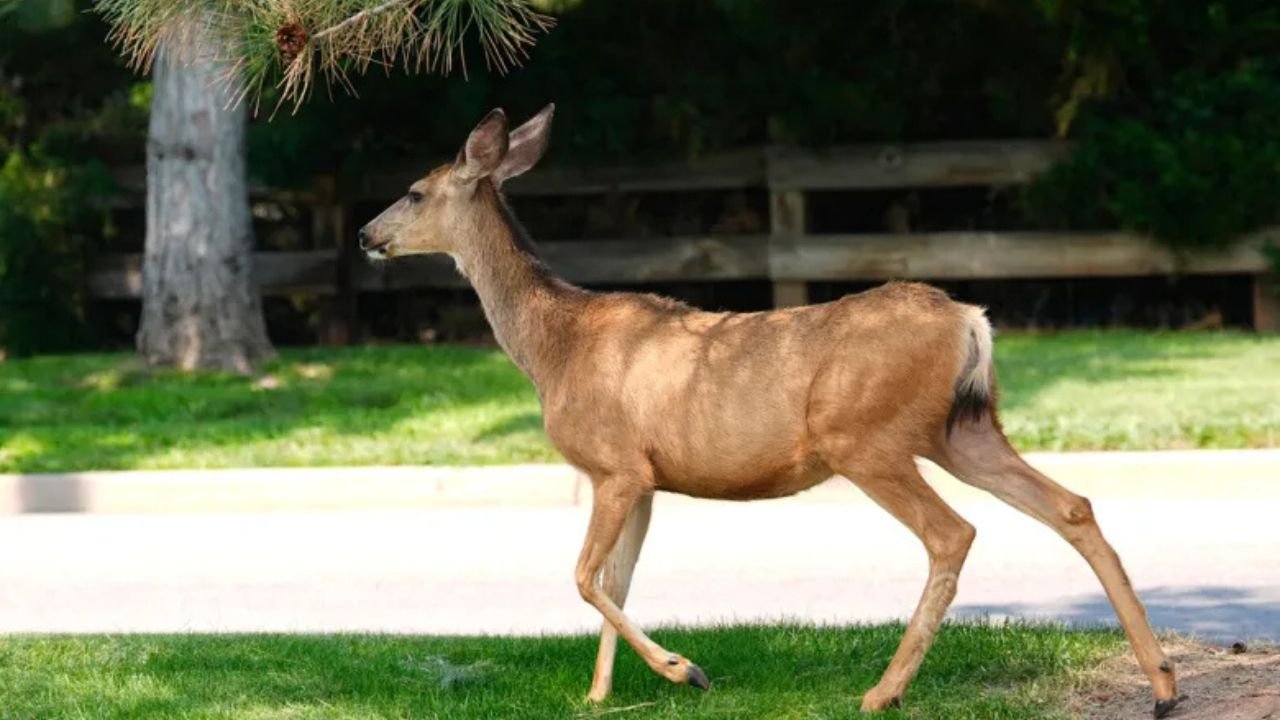
Every spring, people across the U.S. start noticing deer appearing in places they don’t usually expect—front yards, driveways, sidewalks, parks, and even near busy roads. While these sightings often surprise residents, this behavior is becoming more common as seasonal changes and shifting landscapes influence how deer move and search for food. Spring is a time of renewal for wildlife, but it also brings challenges that push deer closer to human neighborhoods.
Understanding why deer wander into suburban areas helps communities stay safer and allows people to better coexist with local wildlife.
Spring brings new food sources that attract deer
After winter, natural food sources are limited. As temperatures warm up, deer begin searching for fresh vegetation. Suburban neighborhoods often provide exactly what they’re looking for.
Lawns, gardens, and decorative plants offer:
- tender sprouts
- young leaves
- blooming flowers
- nutrient-rich shrubs
These are easier to access compared to the forest, where new growth takes longer to appear. Because spring food is essential for recovery after winter, deer follow the fastest available food source—even if it leads them into neighborhoods.
Mother deer look for safe places for their fawns
Spring is fawning season, and mother deer are particularly active during this time. They tend to explore new areas to find quiet and safe spots to give birth and raise their young. Suburban neighborhoods, despite being busy, have certain advantages:
- quiet corners of yards
- patches of tall grass
- wooded areas between houses
- parks and green belts
These locations are often safer from predators compared to deep forests. It’s common for residents to spot does alone or with very young fawns resting nearby. In most cases, the mother is not far away.
Expanding neighborhoods reduce natural habitat
As more housing developments, roads, and commercial areas are built, deer lose access to some of their traditional feeding and nesting grounds. This pushes them to move through or settle near neighborhoods that used to be quiet forests or fields.
Experts note that deer adapt quickly to human activity, especially when:
- natural habitat becomes fragmented
- food sources are replaced by landscaping
- predators are less common in suburbs
As a result, deer become more comfortable exploring or living close to people.
Spring weather patterns encourage movement
Seasonal shifts affect wildlife behavior in many ways. During spring, deer move more frequently due to:
- warming temperatures
- increased daylight
- new plant growth
- breeding and fawning cycles
All of these factors naturally expand their range. Deer are typically most active at dawn and dusk, but in spring, they may be seen throughout the day as they search for food and safe bedding spots.
Young deer explore and gain independence
Yearling deer—those that survived winter but are still young—often start exploring new territories during spring. They separate from their mothers and begin to learn how to survive on their own.
This leads to:
- wandering into unfamiliar neighborhoods
- crossing streets more frequently
- approaching open lawns and gardens
- appearing confused or cautious around people
Their curiosity and lack of experience often bring them closer to homes and suburban parks.
Human activity unintentionally attracts deer
People don’t usually realize how much their surroundings appeal to wildlife. In spring, common features of suburban living can draw deer in:
- bird feeders
- vegetable gardens
- flowering plants
- compost piles
- water sources like ponds or fountains
Even the smell of fresh mulch or soil can attract deer that are searching for food.
Roads and traffic become dangerous during this time
With increased movement, deer are more likely to cross roads. This is one reason why spring brings more deer-related traffic accidents. Their unpredictable behavior, combined with higher activity levels, makes it important for drivers to stay alert—especially at dawn and dusk.
Communities often post seasonal warnings because deer crossings peak in spring and fall.
How residents can respond safely
When deer show up in neighborhoods, it’s important to respect their space. Here’s what people should keep in mind:
- Do not approach deer or try to feed them
- Keep pets away from areas where deer rest
- Drive slowly in deer-active zones
- Avoid touching fawns that appear alone
- Use deer-resistant plants for gardens if necessary
Most deer will leave on their own once they find food and safety elsewhere.
A natural part of spring’s rhythm
Deer wandering into suburban neighborhoods may feel unusual, but it’s a normal part of spring. As plants grow, temperatures change, and new life begins, deer adjust their behavior to meet their seasonal needs. Suburban areas often provide food, shelter, and relative safety—making them appealing for deer during this active time of year.
While these sightings may catch people by surprise, they offer a reminder of how closely humans and wildlife share the environment. Understanding the reason behind this behavior helps communities stay safe and allows deer to continue their natural patterns without unnecessary disturbance.
