


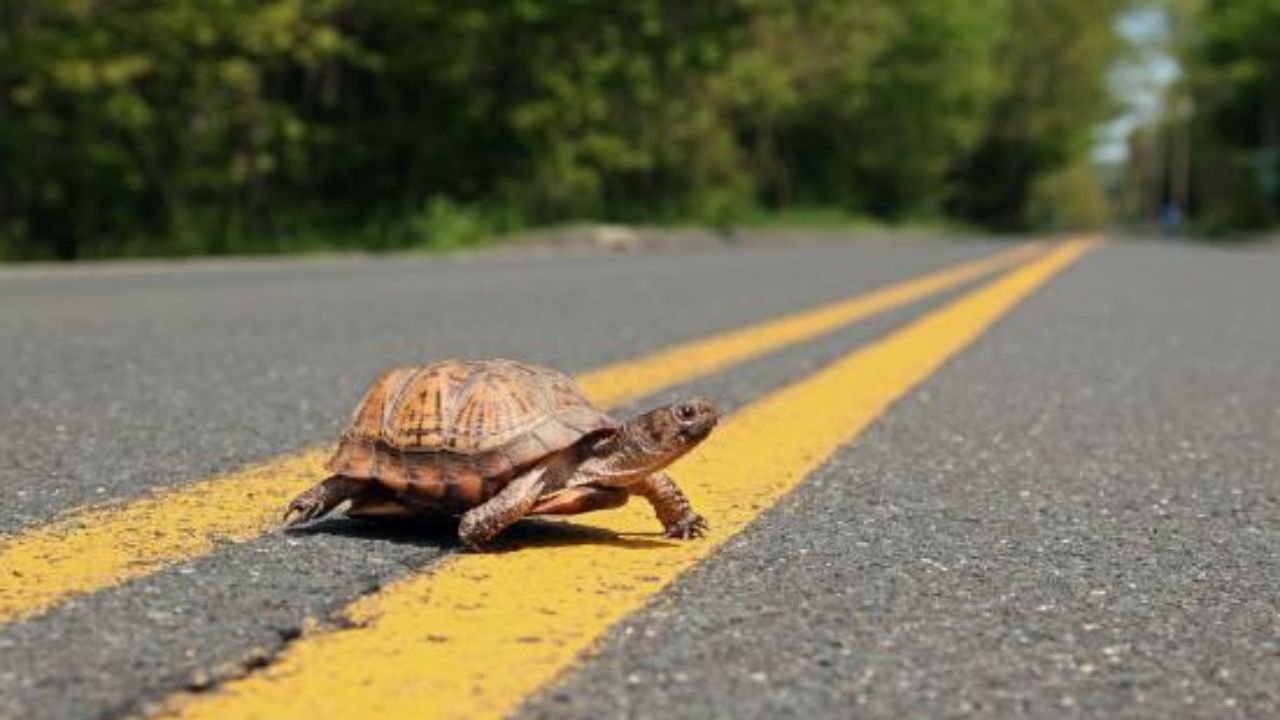
It’s a surprisingly common sight in many parts of the U.S.—a turtle slowly making its way across a busy road, often leaving drivers confused about why it’s even there. While it may look unusual, turtles crossing roads during certain seasons is a natural behavior linked to their survival. But this simple journey can quickly turn dangerous when roads intersect with their habitat.
Understanding why turtles take these seasonal trips not only helps protect them, but also helps communities respond safely. Here’s why turtles make these risky crossings and what it means for local wildlife.
Seasonal movements are driven by breeding instincts
One of the main reasons turtles cross roads is related to nesting. During spring and early summer, when temperatures rise and days become longer, female turtles begin searching for a suitable place to lay their eggs. These nesting areas are often located away from water, which requires the turtles to travel across land.
Because many wetlands and ponds are close to human communities, the path to a nesting site can easily cross a road. Female turtles typically look for:
- warm, sandy soil
- sunny patches
- loose ground that’s easy to dig
- areas safe from flooding
If their natural habitat has been disturbed or blocked by human development, they may travel farther than usual—making road crossings even more common during this period.
Temperature changes trigger seasonal activity
Turtles are cold-blooded animals, meaning their body temperature depends on the environment. As the weather warms up in late spring, turtles become more active. They move more frequently to search for food, mates, and new habitat.
During this time, drivers often see turtles:
- crossing roads to reach warmer basking spots
- leaving winter hiding places and heading toward water
- moving between ponds, lakes, and creeks
These seasonal shifts increase movement, which naturally leads to more road crossings.
Searching for food can push turtles into new areas
In certain seasons, especially late summer and early fall, turtles travel to search for better feeding grounds. Warmer months bring more vegetation, insects, and small aquatic animals. If food becomes limited in their usual habitat, turtles expand their range—and sometimes this expansion requires crossing roadways.
Studies show that turtles may travel miles in search of consistent food sources. Areas near roads often have grassy ditches, small ponds, and wet marshes that attract insects and plants turtles rely on. These tempting food zones can unintentionally lure them across traffic-heavy areas.
Rainfall influences turtle movement
Heavy rainfall patterns can trigger sudden increases in turtle crossings. After a storm, water levels rise, creating temporary wetlands or connecting bodies of water that were isolated before. Turtles take advantage of this by moving through newly accessible routes.
But if these temporary routes intersect with roads, the turtles end up crossing through dangerous spaces. Drivers in areas with frequent summer storms often notice more turtles immediately after rainfall, especially during the breeding season.
Roads often cut through natural turtle habitats
Another major reason turtles end up on roads is simple geography—many roads are built directly between nesting areas and water sources. Over decades, human development has divided their habitat into disconnected pieces.
This means a turtle’s natural path might look like:
- pond → road → nesting ground
or - creek → road → feeding area
From the turtle’s perspective, the road is simply part of their territory. They don’t recognize the danger vehicles pose, and their slow movement makes them especially vulnerable.
Female turtles face higher risk during nesting months
Almost all turtles seen crossing roads during nesting season are female. They may travel long distances to find the perfect place to lay eggs. Once they locate a site, they dig a small nest, lay their eggs, cover them, and then make the journey back to water—often crossing the same road twice.
This round trip increases their exposure to traffic, leading to higher mortality rates. In many areas, conservationists track road crossings because they directly impact turtle populations over time.
How communities can help protect turtles
Even though turtle road crossings are natural, small efforts can help keep them safe. Wildlife groups recommend a few simple steps:
If you encounter a turtle crossing the road:
- Only help if it is safe for you to do so.
- Move the turtle in the direction it was heading, never backward.
- Lift gently from the sides, not the tail.
- Never take the turtle home—it belongs in the wild.
Local communities can also help by:
- reporting hotspots where turtles are often hit
- supporting wildlife crossings or signage
- avoiding disturbing nesting areas
- spreading awareness during peak nesting seasons
Even small actions can make a meaningful impact on turtle populations.
Turtles cross roads because the seasons guide them
Whether they’re looking for nesting grounds, food, warmer temperatures, or new habitat, turtles move according to seasonal cues. Roads simply happen to cut across their natural paths. Their slow pace puts them at risk, but understanding this behavior can help communities protect them better.
The next time you see a turtle crossing a road, remember it’s following instincts that have guided its species for millions of years. And sometimes, a little patience from drivers is all it takes to help these ancient survivors reach their destination safely.
