


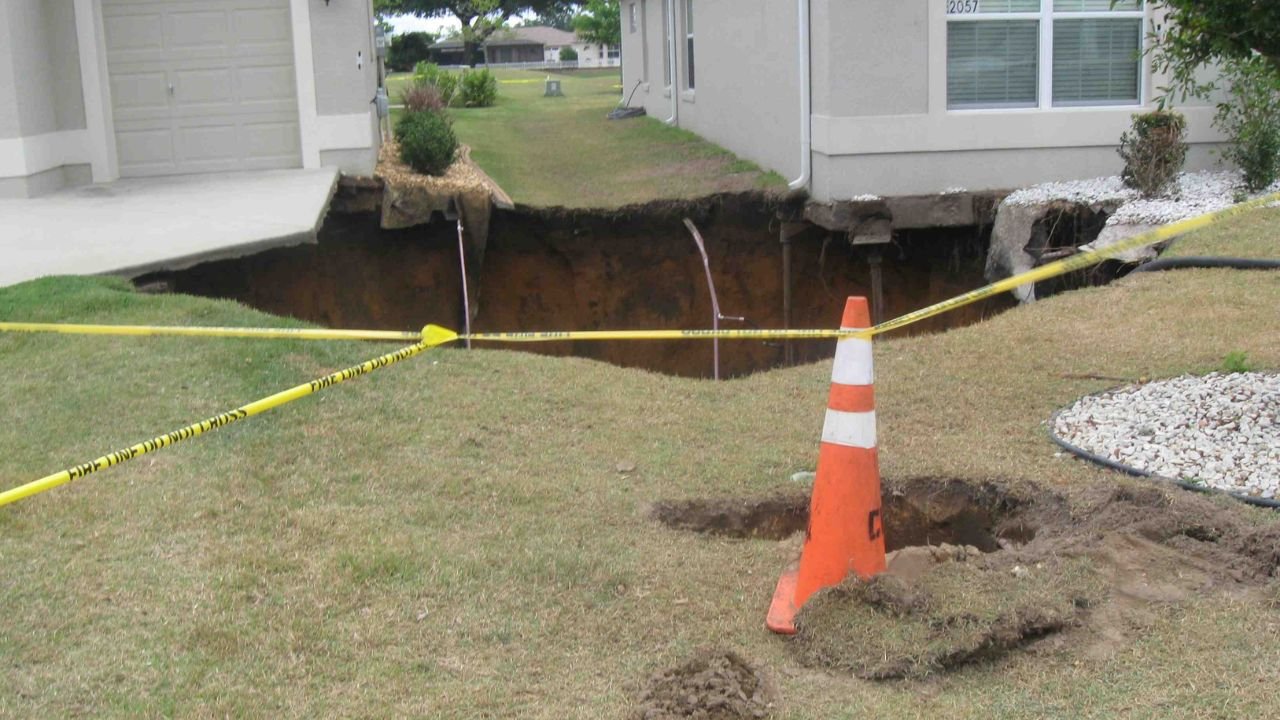
Sinkholes can appear suddenly and cause major damage, but in many cases, the ground gives warning signs long before it collapses. Across several U.S. states, especially regions with soft limestone or heavy rainfall, residents have reported unusual changes in their yards, driveways, or nearby roads just days or weeks before a sinkhole opened.
While not every crack or dip means danger, knowing what to look for can help homeowners identify problems early and stay safe. Here are the key warning signs that may indicate a sinkhole is forming.
Unexplained cracks appearing around your property
Cracks are often the first visible clue. When the ground shifts beneath a home, it can cause surfaces to separate or tilt in unusual ways.
Residents should pay attention to:
- new cracks in walls, ceilings, or floors
- widening cracks in the driveway
- zigzag cracks along exterior walls
- gaps appearing between walls and windows or doors
These cracks often appear suddenly and may continue to expand. If the cracks are only on the surface, it may be normal settling—but widening cracks that appear quickly can signal deeper ground movement.
Soft or sinking ground in the yard
Many sinkholes start small, with the soil gradually becoming softer or spongier. You may feel the ground giving way under your feet, or you might notice a slight depression forming.
Common signs include:
- soft, mushy ground even without rain
- a small circular dip in the yard
- the feeling that the soil is sloping more than before
- patches of grass that suddenly sink
Residents in sinkhole-prone states often report that their yard felt uneven weeks before the ground opened up. If you see a depression getting deeper or wider, it’s important to take it seriously.
Doors and windows suddenly becoming difficult to open
When the ground shifts, the structure of a home can move slightly out of alignment. This often shows up in areas that rely on precise framing, such as doors and windows.
Look out for:
- doors that jam or won’t latch
- windows that stick
- frames separating from the wall
If these changes happen suddenly and aren’t related to humidity or weather, underground movement might be the cause.
Unusual sounds coming from the ground or foundation
Some residents report hearing strange noises before a sinkhole forms. These sounds may include:
- popping
- cracking
- grinding
- shifting noises beneath the home
These sounds often indicate soil movement or pressure changes underground. While they might be subtle, repeated noises in the same area should be checked.
Water pooling where it never pooled before
Changes in drainage can be a major warning sign. If water begins collecting in unusual places or drains much faster than normal, the ground beneath may be shifting.
Watch for:
- new puddles that form even after light rain
- water disappearing quickly into the ground
- sudden changes in how water flows through the yard
Sometimes underground cavities pull water down rapidly, which can be a sign that the soil is weakening.
Fences or trees tilting without reason
Vegetation can reveal early signs of sinking ground. When the soil beneath a tree or fence post shifts, it can cause the object to tilt or lean.
Common indicators include:
- a tree leaning more than before
- fence posts tilting or pulling away from the ground
- roots becoming exposed suddenly
- small holes forming near tree bases
If trees begin to lean with no storm or wind damage, the soil underneath may be collapsing gradually.
Underground utilities acting strangely
Changes in underground utilities can also point to ground movement. For example:
- water pressure drops suddenly
- pipes make unusual noises
- the septic tank area sinks or collapses
- underground lines become exposed
A shifting underground layer can damage pipes and disrupt water flow, which may indicate early sinkhole formation.
Sinkholes on nearby properties or streets
If a neighbor recently dealt with a sinkhole, the surrounding area may also be at risk. Sinkholes often form in clusters or along the same underground pathways.
Residents should stay alert if:
- a sinkhole recently opened near their house
- nearby road crews are repairing ground collapse
- cracks appear on sidewalks or local streets
Even if your property looks normal, it’s smart to monitor for changes when the neighborhood has had activity.
What to do if you notice signs of a sinkhole
If you spot any of these signs—especially if multiple appear at once—don’t ignore them. Early action can prevent major damage and improve safety.
Steps to take include:
- documenting what you see with photos
- avoiding the sunken area
- keeping pets and children away
- contacting local authorities or a professional geologist
- speaking with your insurance company if the issue grows
Experts can evaluate the ground and determine whether a true sinkhole risk exists.
Staying aware keeps residents safe
Sinkholes may seem unpredictable, but the ground often gives subtle signals before collapsing. By paying attention to cracks, soft spots, leaning structures, and unusual changes in water flow, residents can catch early warning signs and act before the situation becomes dangerous.
Staying alert, especially in areas known for natural sinkhole activity, helps protect your home, your family, and your community as coastal and inland environments continue to shift.
