


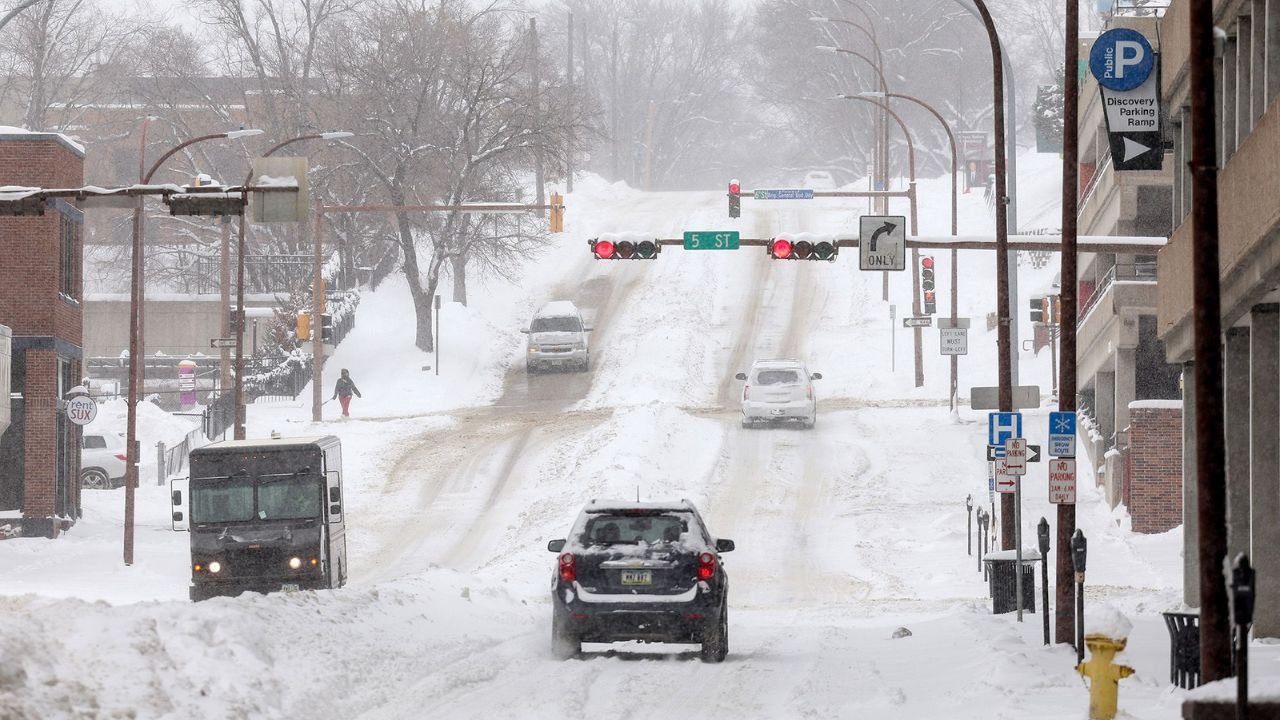
Many parts of the United States experience sudden and dramatic temperature drops—sometimes within hours. One day feels warm and mild, and the next morning brings freezing air, sharp winds, or even unexpected snow. These rapid shifts often surprise residents, but scientists say they are a natural part of the country’s climate system. Several states, especially in the Midwest, Plains, and Mountain regions, are more prone to these fast temperature swings than others.
Understanding why these sudden drops happen can help people prepare better and make sense of the dramatic weather changes they see each year. Here’s a closer look at what causes these rapid temperature declines in the U.S.
Cold fronts move quickly across open land
One of the biggest reasons for fast temperature drops is the rapid movement of cold fronts. A cold front forms when a mass of cold air pushes under a warmer air mass. Cold air is heavier and moves faster, so the boundary can sweep across states very quickly.
This is especially common in states like:
- Colorado
- Kansas
- Nebraska
- Oklahoma
- South Dakota
- Texas
These areas have long stretches of flat land, which allows cold air to surge southward with almost no resistance. When a cold front passes, temperatures can fall 20 to 40 degrees in a matter of hours.
Arctic air can travel far south quickly
Another major factor behind sudden temperature drops is the arrival of Arctic air. When strong northern winds push down from Canada, extremely cold air masses travel rapidly into the U.S. This pattern is especially common during winter but can happen in fall and early spring as well.
These outbreaks occur because the jet stream—a high-level wind current—sometimes dips far to the south. This allows cold Arctic air to pour into the central and eastern U.S.
States like Minnesota, Wisconsin, North Dakota, and Montana feel it first. But the same cold air can rush into states as far south as Missouri, Tennessee, and even northern Texas.
When this happens, temperatures can drop dramatically overnight.
Mountain regions block or trap air masses
States near the Rocky Mountains experience sudden temperature changes for a different reason—mountain geography. Mountains can:
- block warm air
- trap cold air
- speed up winds
- create sudden downward flows of freezing air
A well-known phenomenon called a cold air drainage event happens when cold air collects in valleys at night. When winds shift, this cold air moves rapidly downhill, causing fast temperature declines.
Colorado, Wyoming, Idaho, and Utah often see sudden cold bursts due to mountain effects alone.
The jet stream shifts quickly over the U.S.
The jet stream plays a major role in shaping U.S. weather, and it can change position very quickly. When it dips south, it pulls cold air into the country. When it swings north, warm air returns.
Because the jet stream is constantly moving, temperatures on the ground respond just as fast.
A sudden drop often means:
- the jet stream shifted
- a new air mass arrived
- pressure patterns changed
States in the central U.S. feel these shifts most clearly because they are directly in the path of moving air masses.
Dry air cools faster than moist air
States with dry climates often cool down much more quickly than humid areas. Dry air loses heat faster, especially at night, which can cause dramatic overnight drops.
This is common in:
- New Mexico
- Arizona (higher elevations)
- Colorado
- Nevada
Even if the day feels warm, temperatures can fall sharply once the sun sets because the dry air cannot hold heat.
Temperature inversions break suddenly
In some states, warm air can sit on top of cold air close to the ground. This is called a temperature inversion. When the inversion breaks—usually due to a shift in wind patterns—the cold air suddenly rises to the surface.
This creates rapid cooling, often within minutes or hours.
Inversions are especially common in:
- California’s inland regions
- Utah’s valleys
- parts of Colorado
- mountain basins in the West
When they collapse, temperatures can drop quickly and unexpectedly.
Storm systems trigger fast cooling
Strong storms, especially winter storms, can drag down cold air behind them. When a storm moves through, it pulls in cooler air from the north or west.
Cold air can rush in immediately after:
- thunderstorms
- heavy rain
- snow squalls
- fast-moving pressure systems
This often leads to sudden and dramatic shifts in temperature across the Midwest and East Coast.
A combination of factors makes sudden drops more common
Most sudden temperature drops are not caused by just one factor but a mix of:
- cold fronts
- jet stream shifts
- Arctic air surges
- mountain influences
- dry air cooling
- storm patterns
Because the United States has a wide range of landscapes and open pathways for air movement, these events happen more frequently than in many other countries.
Sudden drops are a natural part of the U.S. climate
While sudden temperature swings may feel surprising, they are a normal part of weather patterns in states with open terrain, strong wind systems, and shifting air masses. Understanding why they happen can help residents stay prepared—whether it’s for a sudden cold breeze, a sharp overnight freeze, or a dramatic weather change that arrives with almost no warning.
