


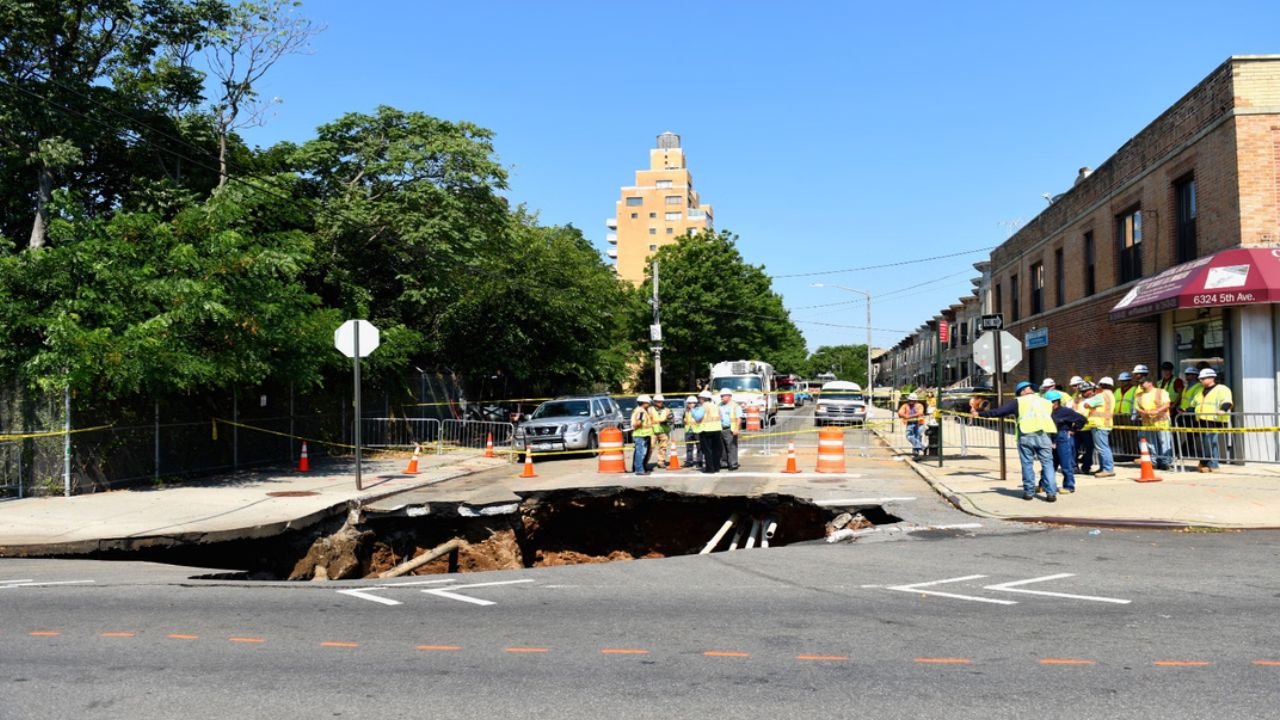
Sinkholes are becoming more common in several parts of the United States, surprising residents, damaging roads, and sometimes swallowing entire vehicles or structures within seconds. While sinkholes are not new, experts say their increasing frequency in certain American cities is linked to a mix of natural processes and human activities that are changing the ground beneath us.
Across states like Florida, Texas, Kentucky, Tennessee, Pennsylvania, and even parts of California, officials have reported a steady rise in sinkhole incidents over the last decade. But what exactly is causing this increase, and why now? Understanding the reasons behind these sudden collapses helps communities stay prepared and safer.
What exactly causes a sinkhole?
A sinkhole forms when the ground beneath the surface erodes or becomes unstable, creating an empty space that eventually collapses. This usually happens when underground rock—often limestone—dissolves slowly over time due to water movement.
In simple terms, sinkholes form when:
- water dissolves rock underground
- the ground above loses support
- the surface layer suddenly caves in
Many U.S. regions sit on what geologists call “karst terrain,” where the rock dissolves more easily. This makes those areas naturally prone to sinkholes.
But today, several additional factors are speeding up the process.
Heavier rainstorms are overwhelming the ground
One major reason sinkholes are appearing more often is the rise in intense rainfall. Many American cities are experiencing stronger and more frequent storms, which send large amounts of water underground in a short time.
When too much water enters the soil quickly, it washes away sediment and dissolves rock faster than normal. This creates larger hollow spaces beneath the surface. Once the ground above can no longer support its own weight, it collapses.
Cities across Florida, Alabama, and Tennessee have reported sinkholes forming shortly after heavy rain or flooding episodes. In some cases, sinkholes appear within hours of a storm.
Aging underground infrastructure is contributing to collapses
Many American cities have water pipes, sewage systems, and storm drains that are decades old. When these systems crack or leak, water escapes into the ground, slowly eroding the soil around and beneath them.
This leads to:
- underground voids forming near leaking pipes
- soil shifting away from building foundations
- roadbeds losing support
Once the soil becomes weak, even minor pressure—like a car driving over it—can trigger a sudden collapse.
Cities like Baltimore, New York, and Philadelphia have reported sinkholes linked directly to aging infrastructure and pipe failures.
Rapid urban development is weakening ground stability
As cities expand, construction activity becomes more intense. Digging, drilling, and paving over natural landscapes can affect how water moves through the ground.
Some common issues include:
- improper drainage in new neighborhoods
- soil compaction from construction machinery
- changes in underground water flow
- removal of trees that help stabilize the soil
These small changes add up over time, making sinkholes more likely—especially in fast-growing cities across Florida and Texas.
Groundwater pumping is creating empty spaces underground
In some regions, groundwater is pumped heavily for:
- farming
- drinking water
- industrial use
When too much water is removed from underground aquifers, the soil and rock lose natural support. This creates gaps that can collapse unexpectedly.
Florida, one of the most sinkhole-prone states, experiences more incidents during periods of heavy groundwater extraction—especially in agricultural areas.
Droughts followed by heavy rain make sinkholes more likely
A pattern many U.S. states are experiencing now is:
- long periods of drought
- sudden heavy rain
During droughts, the soil dries out, contracts, and becomes unstable. When a sudden storm finally brings heavy rain, the dry ground absorbs water unevenly, causing the weakened soil to shift and collapse.
California, Texas, and parts of the Southwest have seen more sinkholes during these rapid weather swings.
More construction means more sinkholes are being discovered
Sometimes sinkholes are not actually increasing—they are just being noticed more often. As more construction projects begin, workers uncover underground voids that were previously unseen.
New roadwork, housing developments, and utility installations often reveal:
- softened soil
- hollow pockets
- unstable underground layers
In many cases, contractors report sinkholes before they cause damage—which is still counted as an incident.
What cities are doing to address the issue
As sinkholes become more common, city officials and engineers are taking steps to reduce risks. These efforts include:
- scanning the ground with advanced imaging
- improving stormwater systems
- repairing old pipes
- strengthening road foundations
- monitoring water use and aquifer levels
Some communities also educate residents on early warning signs, such as:
- cracks appearing in the ground
- small depressions forming
- doors or windows suddenly misaligning
- sinking driveways or yards
Reporting these signs early can prevent major collapses.
Sinkholes are a growing signal of shifting ground conditions
The rise in sinkholes across American cities is not random. More intense weather, aging infrastructure, rapid construction, and changing groundwater patterns are all contributing to the problem. These factors are combining to create conditions where sinkholes are more likely to form—and more likely to cause damage when they do.
As cities continue to grow and the climate continues to shift, sinkholes may become an even more common challenge. Understanding why they happen allows communities to plan better and respond faster, helping protect people, homes, and roads from sudden underground collapse.
